
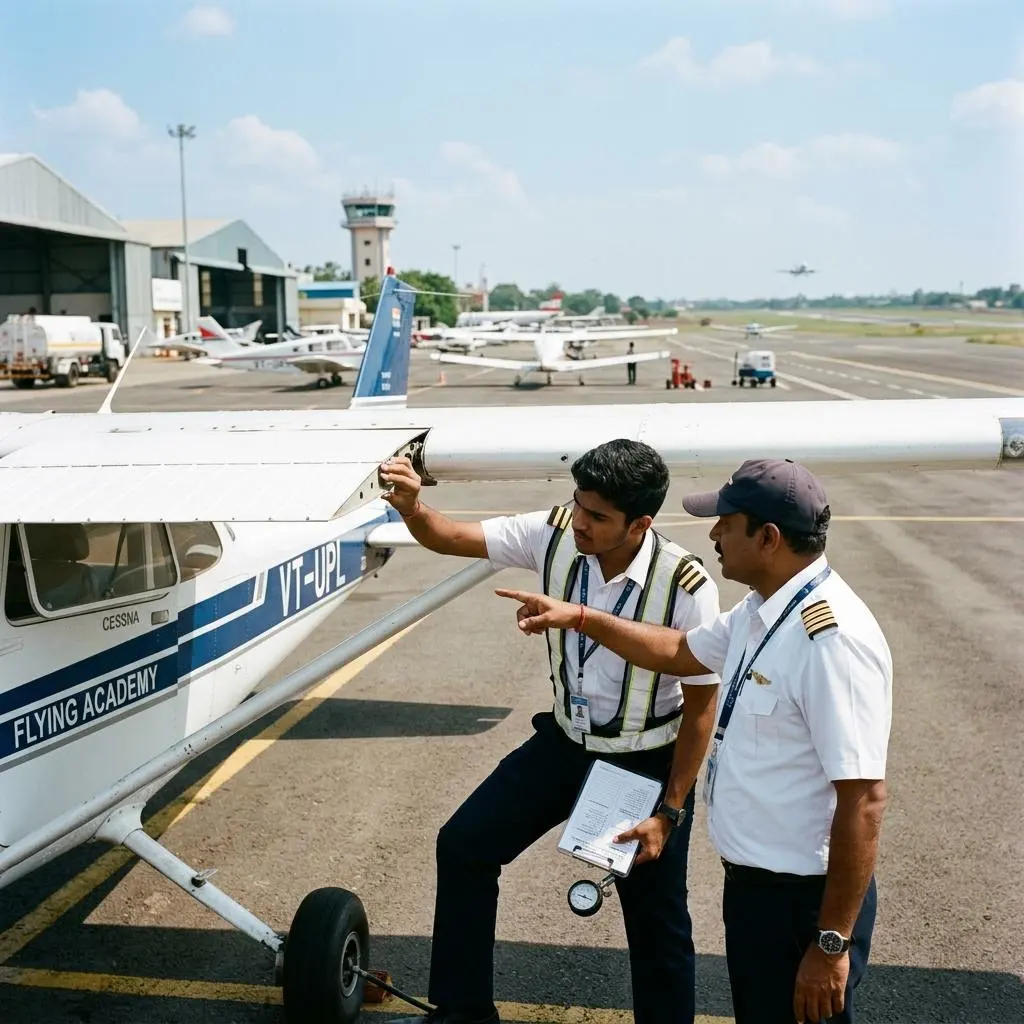
Private Pilot License
The first step for aviation enthusiasts who want to fly for personal use or recreation. A PPL teaches you to handle an aircraft confidently and safely, and in many training systems it is also the first stage on the way to a CPL.
Eligibility, medicals and recognition
Before applying
PPL admission, solo age, licence age, education, English and experience requirements depend on the issuing authority. Ask the school for its regulator’s written requirements. A PPL is for private privileges, not a commercial employment qualification.
Medical planning
Confirm the issuing authority’s PPL medical category before solo flying. If you plan to progress to CPL, discuss professional-route medical fitness early; meeting a private-pilot standard does not establish Class 1 fitness.
Using the qualification in India
Indian PPL conversion has its own Schedule II examinations and tests. PPL hours are not automatically accepted as meeting every later CPL requirement.
What the training covers
- 1
Theory foundations
Basic navigation, aviation meteorology and the rules of the air.
- 2
Dual instruction
Learning aircraft handling, take-offs and landings alongside an instructor.
- 3
First solo
Flying the aircraft alone under supervision, a milestone in every pilot's training.
- 4
Licence tests
Written and practical tests set by the authority of the training country.
Who it suits
- Aviation enthusiasts who want to fly for personal use
- Students testing their aptitude before committing to a CPL
- Anyone who wants a structured introduction to flying
How GSA Aviation helps
- Understanding whether a PPL-first or integrated CPL route suits your goals
- Choosing a destination and academy
- Admission and visa paperwork
Ask about Private Pilot License
Fill in your details and continue on WhatsApp with a counsellor.