CPL training in Poland with an EASA licence
Explore training in Poland under the EASA framework. Check the Polish ULC approval, exact course and issuing authority. Licence privileges do not grant EU residence, work rights or automatic Indian licensing.
- US$81K–89K
- Training fee range*
- 18 – 28 months
- Duration*
- 180–220
- Flying days / year
- ULC / EASA
- Licensing framework
- Individual assessment
- Indian licensing
- ~₹52K / month
- Living cost
Before choosing CPL training in Poland
Ask for evidence specific to your school, course and intended Indian licence.
- Confirm the legal training organisation, current regulator approval, approved course and actual operating base.
- Request a dated fee schedule, aircraft rates, included hours, refund terms and a written offer for your intake.
- Compare fleet and instructor availability and actual student completion times, not a country-wide flying-day claim.
- Confirm overseas admission and medical requirements separately from Indian licensing and immigration eligibility.
Indian CPL eligibility and medical planning
Plan separately for overseas admission and Indian licensing. Indian aeroplane CPL eligibility includes age 18 at application and 10+2 or equivalent with Physics and Mathematics from a recognised board/university. Have academic equivalence and board-verification documents checked. An academy may impose additional English, aptitude and admission requirements.
Arrange advice from a DGCA-empanelled examiner before a non-refundable commitment. Confirm the Class 2 / initial Class 1 process applicable to you, resolve Indian Class 1 fitness for the professional route, and obtain the destination authority’s medical separately. Only an authorised examiner can assess vision, colour perception, hearing, health history and any limitations.
Estimated CPL training fees in Poland
Minimum-to-maximum planning band from selected published routes. Researched 3 November 2026; not a fixed price or all-inclusive budget.
Estimated training fee range
USD 81,000 – 89,000
Published fee research: 3 November 2026
Training covered
Modular PPL, ATPL theory, hour building, night rating, advanced upset recovery, CPL and multi-engine IR.
The upper end adds airline-standard multi-crew training (APS MCC). Tax treatment and additional charges must be confirmed in the written offer. Type rating is excluded.
Duration
18 – 28 months
Unverified legacy estimate
Flying days per year
180–220 days
Unverified; not a training schedule
Separate living allowance
₹40,000 – ₹65,000 / month
Older guide estimate for accommodation, food and transport; not refreshed by this fee research.
Approximate low-to-high ranges from selected published training routes, not the cheapest and most expensive options in each country or a GSA quotation. Course hours and inclusions differ; your actual cost can fall outside the range. All training fee ranges are approximate USD equivalents using European Central Bank reference rates dated 3 November 2026, rounded outward to the nearest USD 500. Exchange rates and bank charges can change the amount payable. Budget separately for accommodation, meals, local transport, travel, visa, insurance, Indian DGCA conversion, extra flying hours and retakes. Check your written offer before adding any charge: some courses already include specific tests or medicals. Airline type rating is not included in these ranges. Ask GSA for the current course-specific offer, included hours, payment terms and refund conditions.
Partner academies in Poland
Explore training regions with GSA Aviation. Course availability and admission requirements are confirmed during consultation.
- 1
Partner academy — Warsaw region
Warsaw region
- 2
Partner academy — Kraków region
Kraków region
- 3
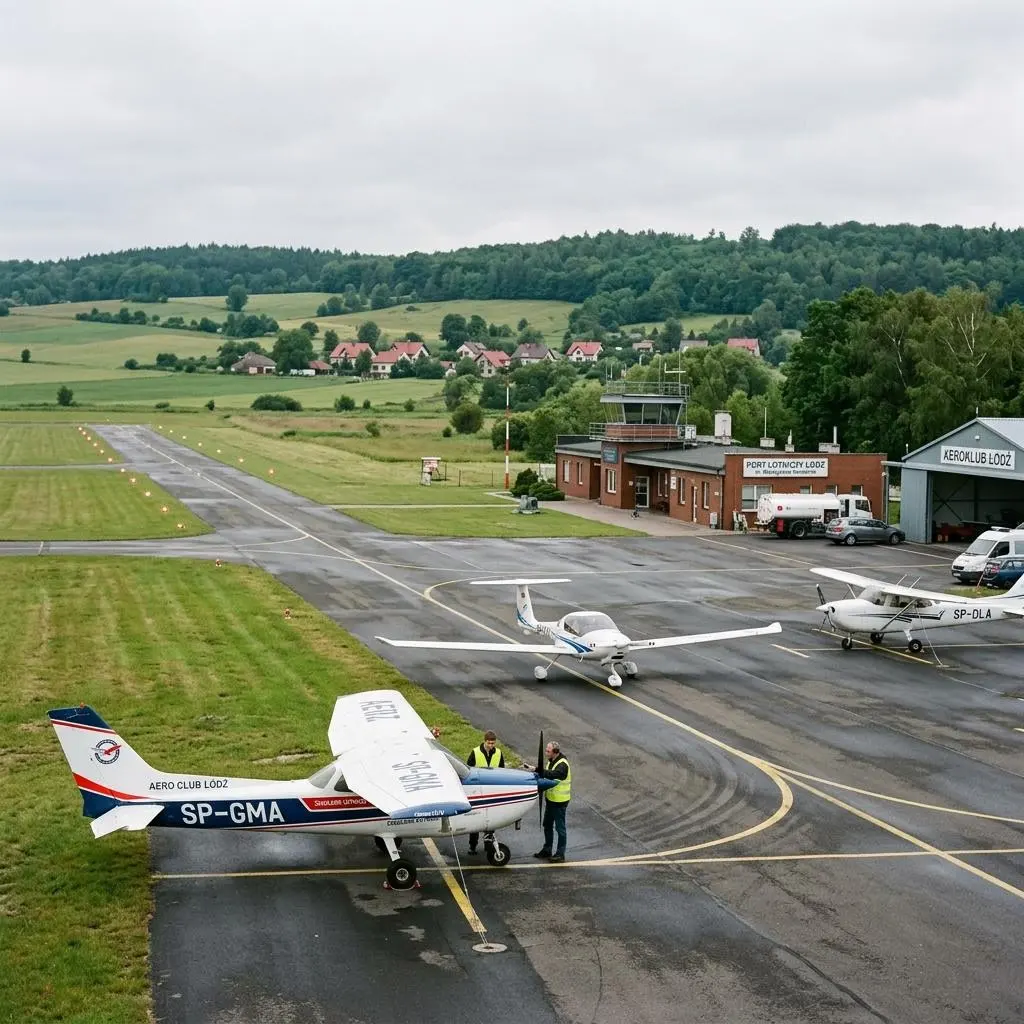
Partner academy — Łódź region
Łódź region
- 4
Partner academy — Warmia-Mazury
Warmia-Mazury
Licences and ratings to ask about
Discuss the available Poland programs with GSA. Not every rating is included in the fee range above. ATPL theory completion is not an ATPL licence.
- PPL (Private Pilot License)
- CPL (Commercial Pilot License)
- IR (Instrument Rating)
- ME (Multi-Engine Rating)
- ATPL Theory (Frozen ATPL)
- FI (Flight Instructor Rating)
Plan the Indian CPL conversion before training abroad
Use these preparation topics alongside DGCA’s current application requirements. The linked conversion CAR is dated 2019; check subsequent amendments, current examination notices and the requirements that apply to your licence and ratings before applying.
Establish Indian eligibility
Check Schedule II requirements for the licence sought, including age, recognised education and medical fitness. For an Indian aeroplane CPL, check the minimum age of 18 and 10+2 or equivalent with Physics and Mathematics. Obtain required academic verification and resolve equivalence before paying for training.
Match experience, not just total hours
Have a qualified adviser map your logbook to the current Indian requirements: total aeroplane time, pilot-in-command time, cross-country route and landings, instrument time and permitted simulator credit, night flying and recent experience. Overseas course minimums may differ. Identify and complete any shortfall; a foreign CPL alone does not prove compliance.
Keep the foreign licence and ratings valid
Check issuing-state licence, medical, aircraft ratings and recency. The 2019 conversion CAR defines rating currency using 10 PIC hours in the preceding 24 months (with limited dual/co-pilot credit), or an applicable flight review/check/skill test in that period in the issuing state. A non-current rating triggers additional Indian technical-specific examination, endorsement training and tests under that CAR. Confirm the current rule and its application to your aircraft.
Plan Indian medical and language requirements
Arrange the appropriate DGCA medical assessment and destination medical separately. For a professional flying route, resolve Indian Class 1 fitness early with a DGCA-empanelled examiner. Check validity, any limitations, and English language proficiency evidence required for your licence; a general English admission test is not a substitute for aviation language proficiency.
Complete applicable theory and radio requirements
The 2019 CAR specifies Air Regulations plus a CPL composite Air Navigation/Aviation Meteorology paper for foreign CPL conversion. Check current CEO/PARIKSHA notices, exam validity and your candidate category. Also confirm current radio-telephony certification, FRTO and signals/practical requirements. Do not assume that a foreign radio certificate is sufficient or that the historical WPC process still applies unchanged.
Arrange Indian skill tests and rating checks
The conversion CAR requires competency tests with a DGCA-approved examiner in India. Check the current Flight Crew Licensing Circular 01 of 2012 and any amendments for day/night, cross-country, instrument and multi-engine tests applicable to your case. Instrument and additional aircraft ratings need their own evidence and checks; they are not automatically endorsed with the CPL.
Verify records and submit the current application
Prepare identity and education evidence, valid licence and medical records, authenticated logbooks and experience summaries, theory results, radio and language evidence, skill-test reports and issuing-authority verification. Confirm the current eGCA checklist, fees, document validity and any security or authentication requirements. DGCA can verify records directly with the foreign authority and school.
DGCA India conversion
A foreign CPL is not permission to fly Indian-registered aircraft. Indian licensing depends on education, age, medical fitness, verified licence and logbooks, experience and recency, applicable theory and radio requirements, and DGCA-approved skill tests in India. Plan the Indian requirements before overseas enrolment; no conversion timeline or outcome is guaranteed.
A ULC / EASA licence is not automatically valid in India. Conversion depends on DGCA's requirements in force when you apply, and your own documents and test results.
Visa type
Confirm the national visa or residence route for the duration and legal category of your flight course; a Schengen visa is not a blanket long-term study authorisation.
Work rights
Not confirmed for standalone flight training. Do not apply university full-time-student work exemptions or a blanket 20-hour rule to a private flight course. Obtain confirmation for your residence status and course from the Polish authority.
DGCA conversion
Subject to current DGCA requirements. GSA guides you.
Visa and work eligibility are subject to current immigration rules and individual eligibility.
Verify your plan with DGCA and the destination's immigration authority before paying fees. GSA works with partner academies for these programs. Academy names and course-specific details are shared during consultation rather than listed publicly.
Ready to plan training in Poland?
GSA Aviation helps with academy selection, student visa documentation and DGCA conversion guidance. The first consultation is free.
+91 95556 70111GSA Aviation, Noida. Part of GSA Overseas.